
Why Does Green Algae Grow on Patios?
Algae can develop where moisture remains available for extended periods. Shade, limited drying and accumulated organic debris may encourage growth. Patios surrounded by trees, fences or buildings can be particularly susceptible.
Is Green Algae on a Patio Dangerous?
Algae-covered paving may become slippery, especially when wet. The level of risk depends on the surface texture, amount of growth and conditions. Take care when walking on visibly slippery paving and avoid cleaning methods that introduce additional hazards.
Step 1 — Identify Your Patio Material
Before choosing a cleaning method, establish whether your patio is concrete, Indian sandstone, limestone, porcelain or another material. Different surfaces have different cleaning requirements. Some natural stones are sensitive to incompatible products or aggressive cleaning.
Step 2 — Remove Loose Debris
Leaves, soil and loose organic material can retain moisture against paving. Suitable brushing and debris removal may help prepare the surface for further cleaning. Take care not to scratch delicate finishes.
Step 3 — Select a Compatible Cleaning Product
Choose a product confirmed as suitable for the particular paving material and any existing treatment. Follow the manufacturer's instructions for application, contact time, rinsing and safety. Never mix cleaning chemicals. Consider the effects of runoff on nearby plants, drains and other surfaces.
Step 4 — Consider Professional Cleaning
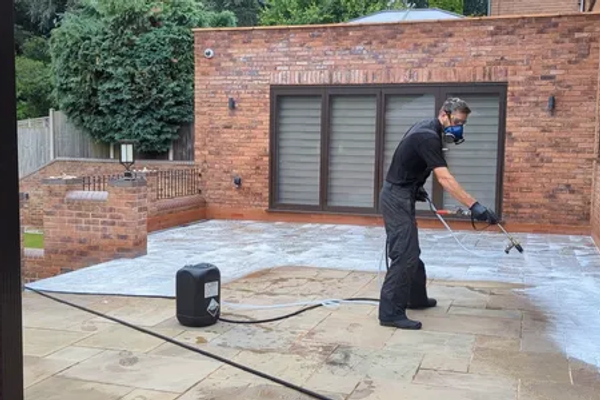
Professional cleaning may be appropriate where algae is widespread, the surface is delicate or the correct method is uncertain. The approach should be based on the material and condition rather than simply using the highest available water pressure.
Can Pressure Washing Remove Green Algae?
Pressure washing can remove some surface contamination from suitable paving. However, inappropriate pressure or technique may damage vulnerable materials, joints or surface finishes. Not every patio should be treated identically.
Why Does Green Algae Keep Coming Back?
Cleaning removes existing deposits but does not permanently change environmental conditions. Shade, moisture, drainage and organic debris can encourage regrowth. Appropriate maintenance may help manage the problem over time.
How to Reduce Algae Regrowth
Consider the following maintenance steps:
These measures may reduce contamination but cannot guarantee permanent prevention.
Green Algae vs Moss — What's the Difference?
Algae often appears as a green surface deposit, while moss commonly forms more distinct growth. Both can develop in damp conditions, but their characteristics and suitable treatments may differ. Correct identification helps avoid unnecessary or inappropriate cleaning.
Professional Patio Cleaning in Essex
Essex Exteriors welcomes patio cleaning enquiries from Billericay, Chelmsford, Brentwood, Wickford, Basildon, Rayleigh and surrounding areas. See our main patio cleaning service page for more about how we work, and the local pages below for your area.
Struggling with a green, slippery patio? Essex Exteriors can assess your paving and recommend a suitable cleaning method.
Get a Free Patio Cleaning Quote