
What Is Jointing Sand?
Many conventional block-paved driveways use sand within the joints between individual blocks. The jointing material forms part of the installed paving system and helps the blocks function as intended. Different paving installations can use different jointing materials, so the correct product should be identified before maintenance.
Why Does Pressure Washing Remove Jointing Sand?
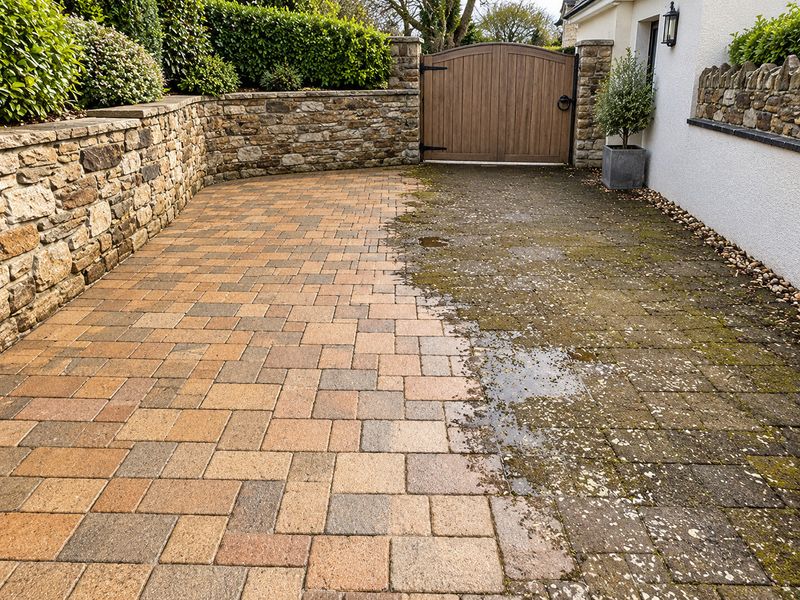
Water pressure can dislodge sand from joints, particularly where the material is already loose or depleted. Aggressive cleaning techniques may increase this effect. The amount of sand lost depends on the condition of the driveway and the cleaning method.
Signs Your Block Paving May Need Re-Sanding
Visible Empty Joints
Sand Washed Out During Cleaning
Existing Joint Deterioration
Loose or Moving Blocks
Recurring Joint Problems
What Type of Sand Is Used for Block Paving?
Conventional block paving commonly uses a suitable kiln-dried jointing sand, but this is not appropriate for every paving system. Some installations use specialist jointing compounds or other materials. Always follow the paving manufacturer's or installer's guidance.
When Should Re-Sanding Be Carried Out?
Re-sanding should take place when the paving and joint conditions are suitable for the chosen material. For conventional kiln-dried jointing sand, appropriate dry conditions are important. The exact preparation and timing depend on the product instructions and installation.
Does Every Driveway Need Re-Sanding After Cleaning?
No. The requirement depends on how much jointing material remains, the paving type and its overall condition. Re-sanding should be recommended based on assessment rather than automatically added to every cleaning job.
Can You Re-Sand Block Paving Yourself?
Some homeowners carry out basic joint maintenance on conventional block paving. However, the correct material and preparation are important. Where blocks are loose, joints are failing repeatedly or the paving uses a specialist system, professional assessment may be more appropriate.
Re-Sanding vs Driveway Sealing
Re-sanding and sealing serve different purposes. Re-sanding addresses suitable jointing material between paving blocks. Sealing involves applying a compatible surface product where appropriate. One does not automatically replace the need for the other. Learn more about driveway sealing.
Is Re-Sanding Included in Professional Driveway Cleaning?
Not necessarily. Some driveway cleaning quotations cover cleaning only, while re-sanding is quoted separately. Before booking, ask whether jointing sand replenishment is included and what material will be used.
Block Paving Cleaning and Re-Sanding in Essex
Essex Exteriors welcomes enquiries about suitable block paving cleaning and optional re-sanding across Billericay, Chelmsford, Brentwood, Wickford, Basildon, Rayleigh and surrounding areas.
If you're considering having your block paving cleaned, Essex Exteriors can assess the surface and recommend a suitable approach.
Explore Driveway Cleaning in Essex